Ethanol Oxidation Priority in Human Metabolism
Understanding biochemical pathways and enzymatic mechanisms of ethanol metabolism
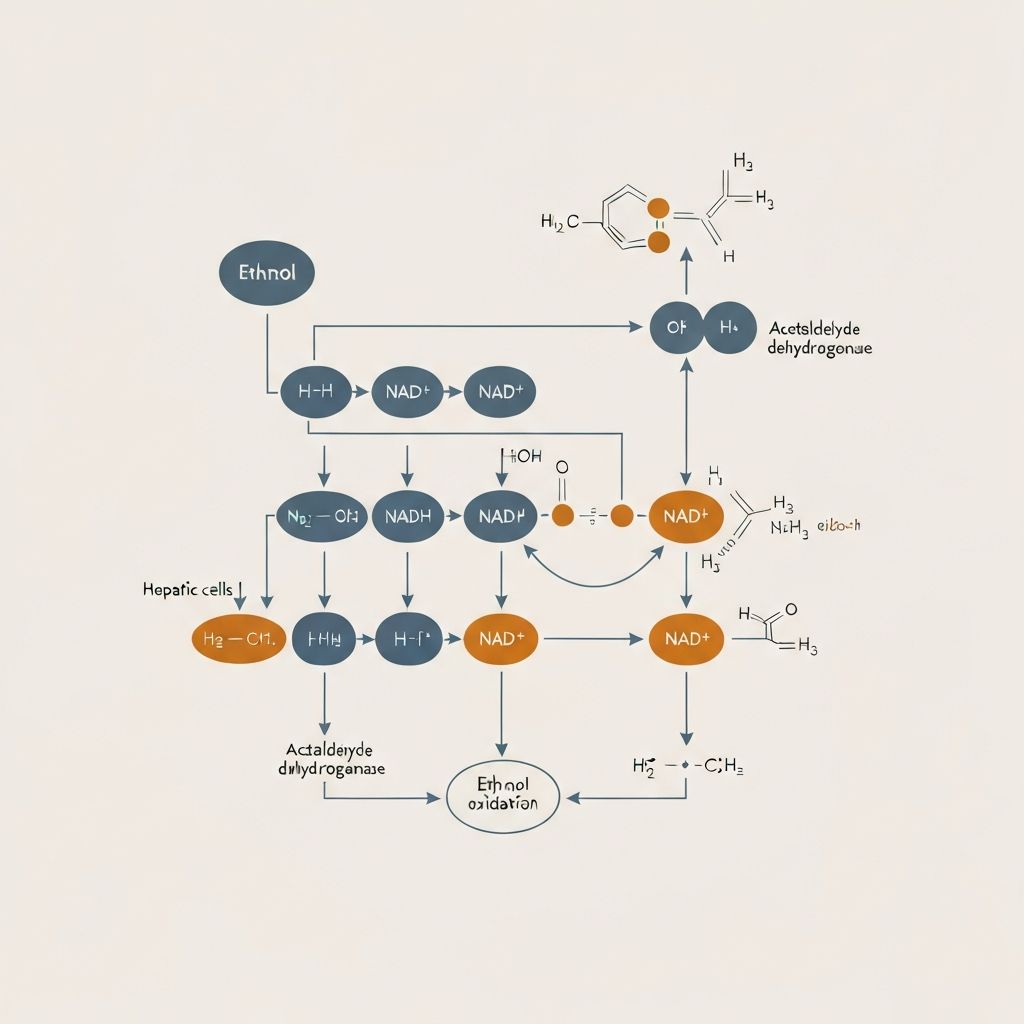
The Metabolic Priority of Ethanol
When ethanol enters the bloodstream following consumption, the body treats it as a priority substrate for oxidation. This is not due to any nutritional benefit—ethanol is toxic to cells—but rather reflects a protective mechanism: the body must eliminate alcohol as quickly as possible to minimize damage. The liver, the primary site of ethanol metabolism, commits enzymatic resources to its breakdown with high priority.
The Alcohol Dehydrogenase Pathway
The primary route of ethanol metabolism involves the enzyme alcohol dehydrogenase (ADH). This enzyme catalyzes the conversion of ethanol to acetaldehyde, a toxic intermediate. The reaction generates NADH, a coenzyme critical for cellular energy and redox balance.
The acetaldehyde produced is rapidly converted to acetate by another enzyme, aldehyde dehydrogenase (ALDH). This second step also generates NADH. The acetate that remains can then be oxidized for energy or incorporated into metabolic pathways for lipid synthesis.
Energy Yield from Ethanol
Ethanol provides 7 kilocalories per gram, making it a significant energy source. However, unlike macronutrients, alcohol cannot be stored in the body. The body must oxidize it immediately or convert it to storage forms (primarily fat). This metabolic inflexibility—the inability to store alcohol for later use—further emphasizes its priority status.
The NADH Accumulation Effect
A critical consequence of ethanol oxidation is the accumulation of NADH. The elevated NADH-to-NAD+ ratio alters the cellular redox environment in ways that influence multiple metabolic pathways. This shift has downstream effects on substrate utilization, as described in subsequent articles in this series.
Individual Variation in Metabolism
Genetic variation in ADH and ALDH enzymes influences how quickly different individuals metabolize ethanol. Some populations carry enzyme variants that affect the rate of alcohol metabolism and the accumulation of acetaldehyde. These genetic differences contribute to variation in alcohol tolerance and metabolism among individuals.
Nutritional Context
The rate and pathway of ethanol metabolism can be influenced by nutritional status. For instance, individuals with adequate nutrient intake oxidize alcohol differently than those with certain nutritional deficiencies. Food consumed alongside alcohol can also influence the peak blood alcohol concentration and metabolic dynamics.
Educational content only. No promises of outcomes.
Related Articles
Alcohol and Suppression of Fat Oxidation: Acute Effects
Alcohol-Induced Appetite Disinhibition
Endocrine Responses to Alcohol Consumption
All Research Articles